








Ice Safety System: The Breakthrough That Makes Water Use in Dry Coolers Possible
Improving Effi ciency by Eliminating Glycol
In industrial cooling systems, data centers, and HVAC applications, glycol has traditionally been used to protect outdoor hydraulic circuits from freezing. However, this solution involves a signifi cant compromise: the system is designed around a fl uid with lower thermal performance than water.
With Ice Safety Systems (ISS), developed by the engineering team at Enex Technologies, it becomes possible to leverage the benefi ts of pure water while maintaining maximum freeze protection for outdoor fi nned coils and dry coolers.
Why Glycol Is a Limiting Factor
While glycol provides freeze protection, it also introduces several drawbacks that negatively impact overall system efficiency.
In other words, the entire system is designed and operated around a less effi cient heat transfer fl uid, directly affecting operating costs and energy performance.
The Glycol penalty
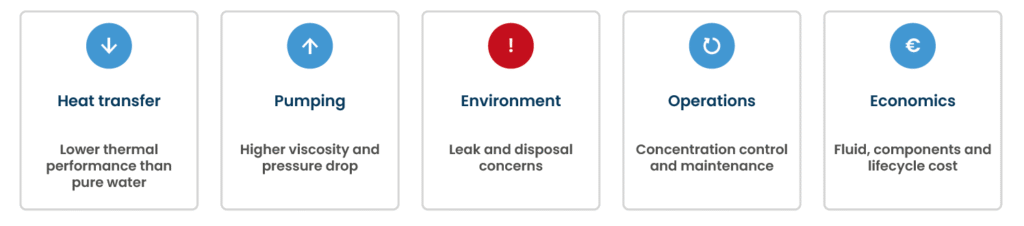
In other words, the entire system is designed and operated around a less effi cient heat transfer fl uid, directly affecting operating costs and energy performance.
The Opportunity: Using Pure Water
Water is the most effective heat transfer fl uid available for thermal exchange applications. Its properties deliver superior performance from both thermal and hydraulic perspectives.
Benefi ts of Water Compared to Glycol
• Higher Thermal Effi ciency
Water provides more effective heat transfer, allowing the full utilization of the available heat exchange surface and temperature differentials.
• Reduced Pumping Energy Consumption
Its lower viscosity reduces pressure drops and the energy required to circulate the fl uid.
• Lower Operating Costs
No periodic concentration checks or glycol replacement activities are required.
• A Strategic Advantage for Data Centers
In large cooling installations, such as a 1 GW data center, the volume of circulating fl uid can reach approximately 20,000 m³.
With a solution containing 25% propylene glycol, around 5,000 m³ of glycol would be required, representing an investment that can reach tens of millions of euros.
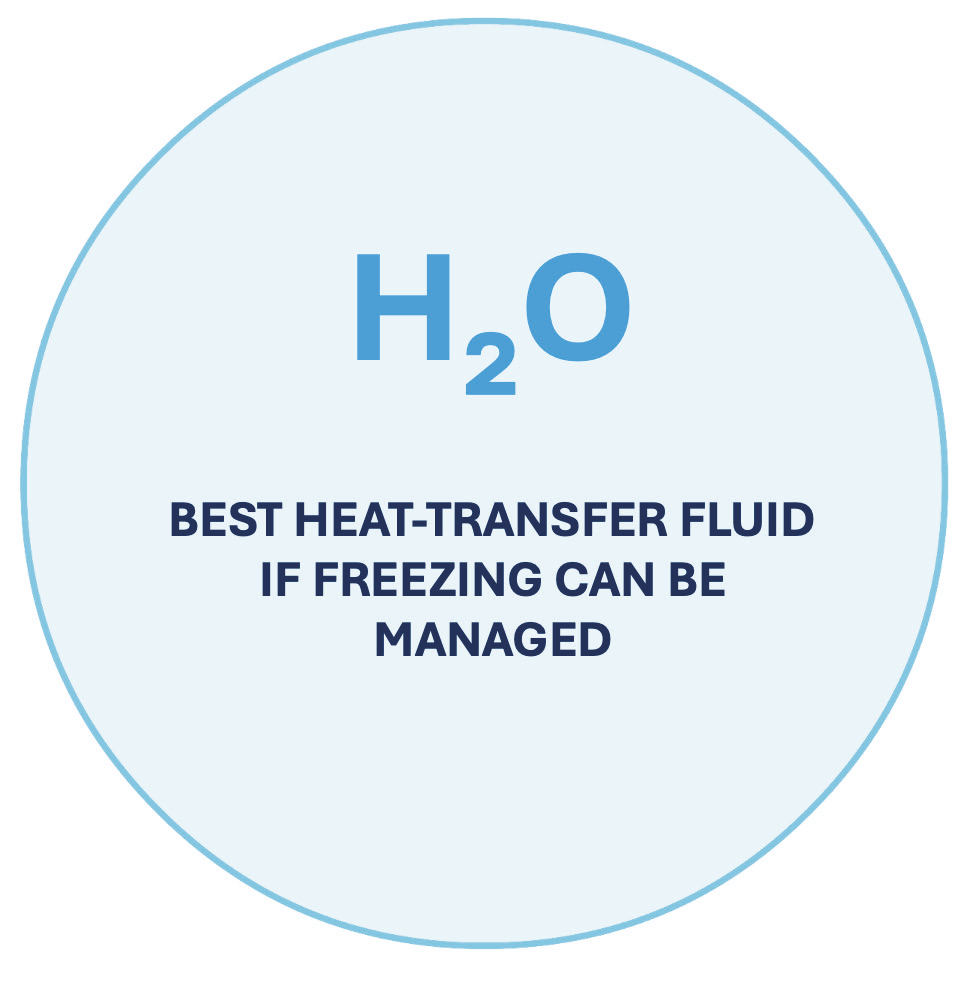
The Real Problem Is Not Water. It Is Freezing.
When water freezes inside a fi nned coil, the issue is not simply the formation of ice.
During the freezing process, ice plugs can form inside the tubes, trapping liquid water. The volume expansion associated with ice formation generates localized pressure peaks that can deform or even rupture the tubing.
The real engineering challenge is therefore ensuring that the system reacts before these overpressures can damage the equipment.
Ice Safety Systems: Two Approaches to Freeze Protection
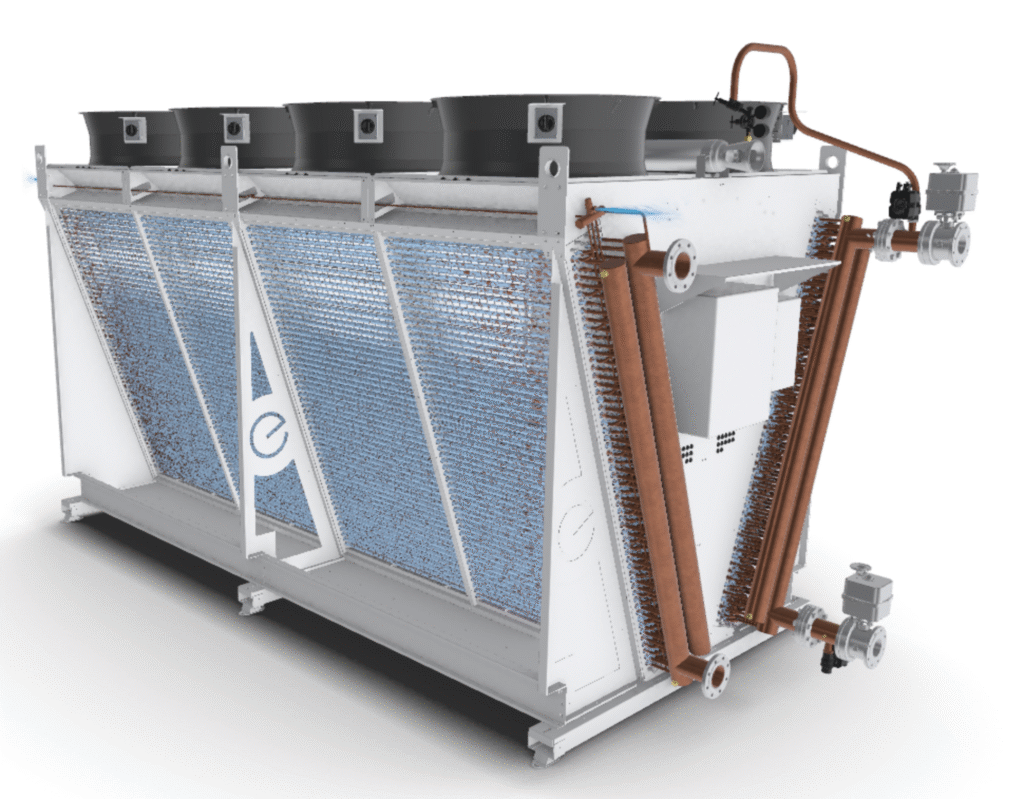
Mechanical ISS: Passive Coil Protection
Mechanical ISS acts after freezing has already begun. A network of capillary tubes connects the critical sections of the coil and transfers excess pressure to a common safety system equipped with a relief valve. This allows pressure to be controlled and limited before it can cause tube deformation or failure.
Advantages of Mechanical ISS
- No electrically powered emergency sequence required.
- Simple and reliable architecture.
- Passive management of overpressure.
- Technology developed from fi eld experience with approximately 5,000 installed units.
Forced ISS: Active and Preventive Freeze Protection
Forced ISS intervenes before potentially damaging ice can form.
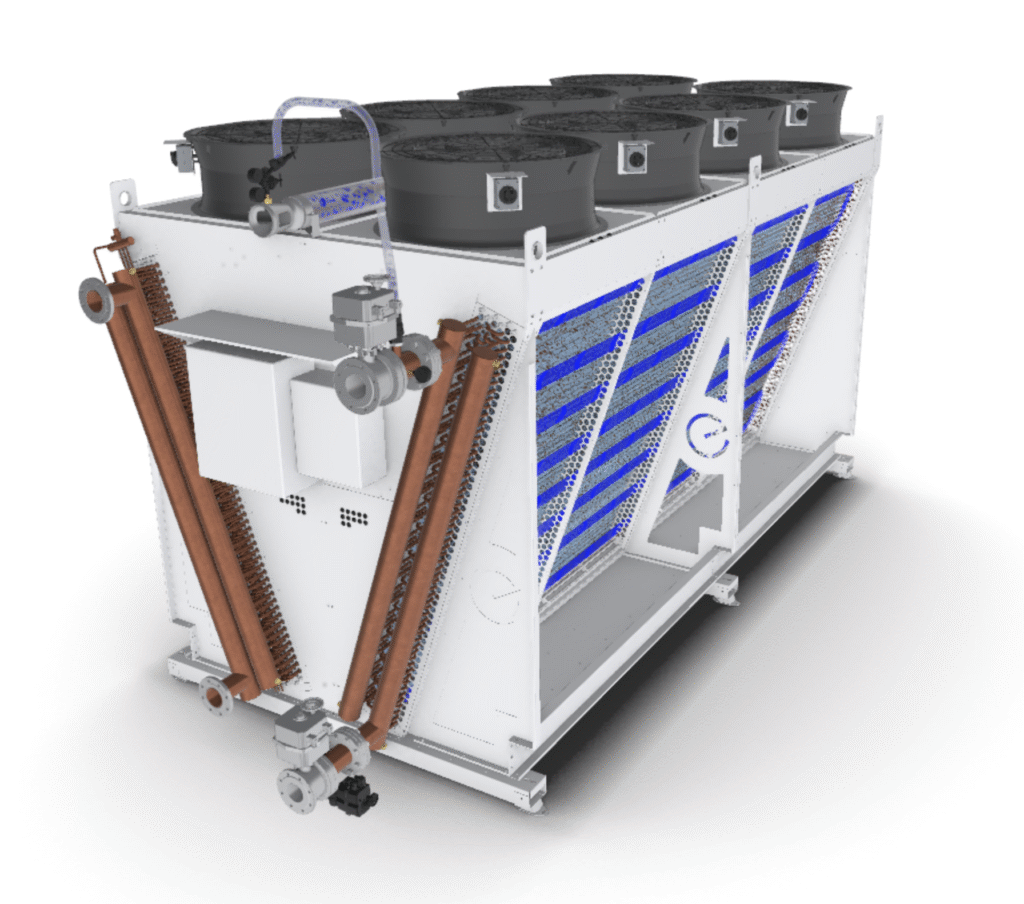
Through a network of temperature sensors, a dedicated controller detects freeze risk and automatically initiates a protection sequence that includes:
- Freeze risk detection.
- Fan shutdown.
- Coil isolation.
- Gravity drainage.
- Controlled-pressure nitrogen injection.
- Purging sequence.
- System closure and securing.
- Continuous system status monitoring.
At the end of the procedure, the coil is completely drained of water and maintained under a slight nitrogen overpressure, eliminating the risk of freezing.
Ideal Applications
Ice Safety Systems are suitable for a wide range of applications where energy effi ciency and reliability are critical:
- Data centers
- Manufacturing industry
- Food processing
- Industrial refrigeration
- District heating
- Hospitals and healthcare facilities
- Shopping centers
- Offi ce buildings
- Airports
- Swimming pools
- Sports facilities and ice rinks